
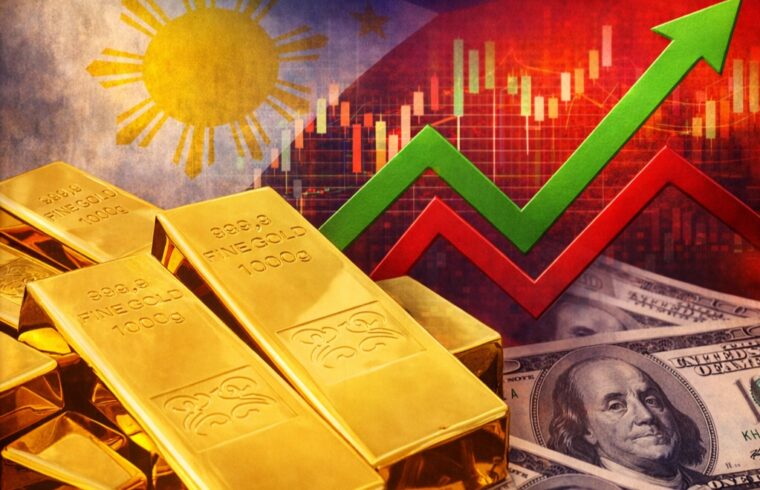
The relationship between gold and the U.S. dollar is supposed to be simple. When one rises, the other falls. A stronger dollar usually pushes gold lower; a weaker dollar tends to lift it.
The logic is mechanical. Gold is priced globally in dollars, so a rising greenback makes bullion more expensive for foreign buyers.
Investors also treat the two as competing safe havens: confidence in the economic system pushes capital into dollars and yield-bearing assets, while fear drives money into gold, which offers no yield but promises permanence.
That is why the current moment is unsettling. Gold and the U.S. dollar are rising together.
Ordinarily, the two assets sit on opposite sides of investor psychology. The dollar strengthens when markets trust the economic order that produces it. Gold climbs when markets doubt that order and seek protection from it. When both surge simultaneously, markets are sending a more complicated signal: confidence remains, but doubt is creeping in.
History offers only a few precedents. Similar overlaps appeared in the late 1990s and again in 2007, just before the global financial crisis. In neither case did panic erupt immediately. Instead, the unusual convergence hinted that risks were building quietly beneath the surface of the financial system.
Gold rarely rallies because it is fashionable. It tends to rise when central banks, sovereign funds, and institutional investors sense structural vulnerability ahead. That pattern is visible today. Central banks have been buying gold at the fastest pace in decades, particularly in emerging markets seeking to diversify away from dollar-denominated reserves.
The dollar’s dominance remains formidable. Roughly half of cross-border loans and debt securities are denominated in dollars, and the currency accounts for nearly 90% of global foreign-exchange transactions. This framework dates back to the aftermath of the Second World War, when the United States held about three-quarters of the world’s gold reserves and anchored the monetary system that would evolve into today’s dollar-centric order.
Even after the gold standard disappeared, the United States retained more than 8,000 tonnes of bullion—the largest official reserve in the world—helping reinforce confidence in the currency that still anchors global finance.
Gold, however, plays by different rules. Unlike fiat currencies, it does not rely on fiscal discipline, debt ceilings, or the political management of interest rates. Its supply grows slowly and its value is rooted in centuries of monetary history rather than policy promises. Central banks collectively hold roughly a fifth of all the gold ever mined because it functions as insurance against the failure of those promises.
Normally investors choose between these two safe havens. Demand for one suppresses demand for the other. But periods of intense uncertainty can scramble that logic. Geopolitical conflicts, inflation fears, and trade fragmentation have driven simultaneous flows into both assets in recent years. Gold has surged to repeated record highs while the U.S. dollar has remained resilient despite expectations of future interest-rate cuts.
The mechanics behind this paradox are revealing. Inflation concerns keep gold attractive as protection against currency debasement. At the same time, strong U.S. yields and the world’s need for dollar liquidity support the greenback. Markets are hedging in two directions at once: trusting the existing system while quietly insuring against its possible erosion.
That is the unusual signal now flashing across markets. Gold and the dollar are rising together. When both climb at the same time, it does not signal immediate crisis—but it suggests investors are hedging against uncertainty rather than expressing pure confidence.
For countries like the Philippines, these signals are not abstract. They show up directly in the exchange rate, inflation, and the stability of foreign reserves.
The Philippine peso has already weakened toward the ₱60-per-dollar threshold, reflecting pressure from higher oil prices, geopolitical tensions, and persistent global inflation. A weaker peso carries mixed consequences. It boosts the peso value of remittances from overseas Filipino workers and strengthens the competitiveness of the country’s business-process outsourcing sector—two pillars of the Philippine economy that earn in dollars.
But the downside is equally clear. A weaker currency makes imports—from fuel to food—more expensive and increases the cost of servicing foreign-denominated debt. In an economy heavily dependent on imported energy, sustained commodity shocks can quickly translate into domestic inflation.
In this environment, the Philippines’ rising gold reserves provide an underappreciated cushion. Surging global bullion prices have pushed the value of the Bangko Sentral ng Pilipinas’ gold holdings above $23 billion, lifting gold’s share of international reserves and strengthening the central bank’s balance sheet as currency volatility increases.
This is less a speculative bet than monetary insurance. For emerging economies exposed to capital flows and commodity shocks, gold offers a buffer that does not depend on interest-rate cycles or exchange-rate swings.
The broader message from global markets is harder to ignore. Investors are accumulating dollars because the system still runs on them. They are accumulating gold because they want protection if that system eventually shifts.
For the Philippines, the lesson is pragmatic. A world where gold and the dollar rise together is one where uncertainty is quietly increasing—even before crises appear in headlines. The task for policymakers is not to predict when those stresses might surface, but to ensure the country is prepared if they do.
Stay updated—follow Philippines Today on Facebook and Instagram, and subscribe on YouTube for more stories.