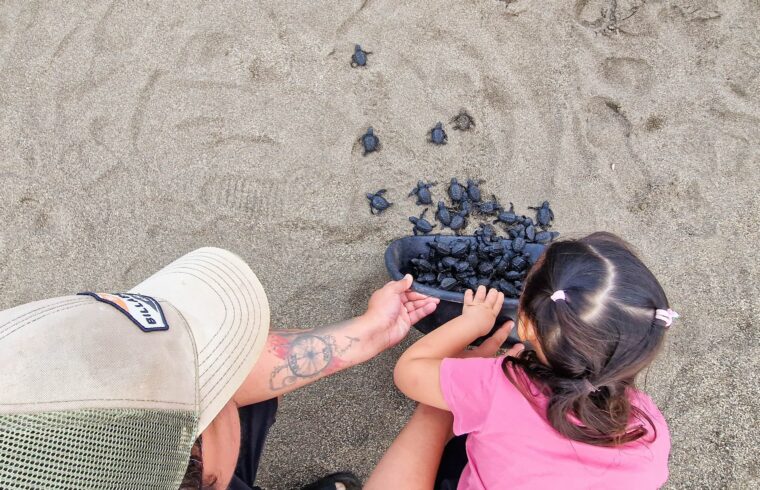
Along the shoreline of Seafront Residences in San Juan, Batangas, volunteers gather as dozens of newly hatched Olive Ridley sea turtles emerge from the sand and begin their slow crawl toward the water.
The release is part of an ongoing conservation effort that has taken place along the beach for eight years, where residents, scientists, and local volunteers work together to protect nesting sea turtles.
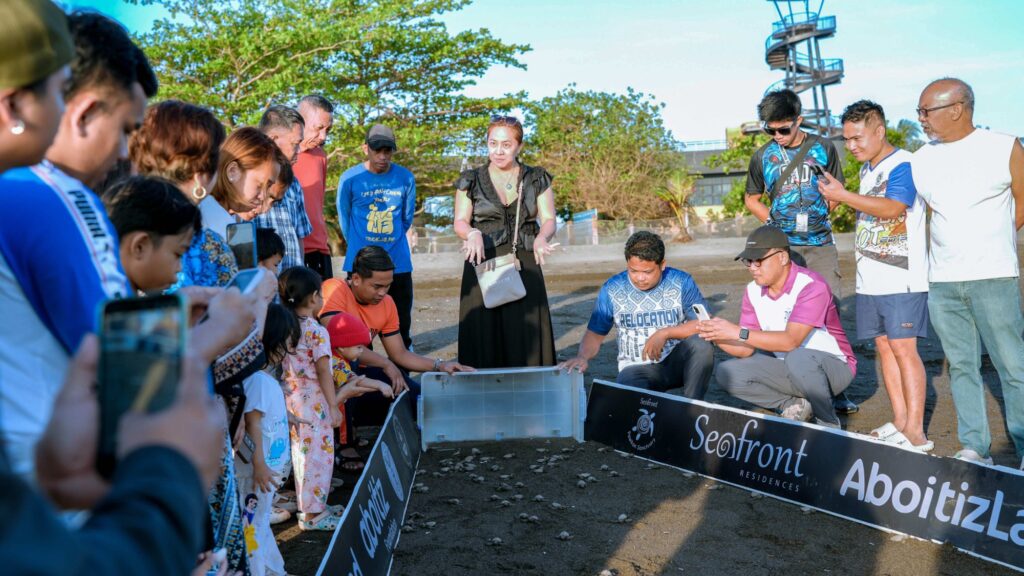
Aboitiz Land recently marked the eighth year of its Pawikan Conservation Project at Seafront Residences, a coastal community where natural turtle nesting activity along the beach prompted a partnership between scientists, residents, and volunteers to protect the vulnerable species.
This season alone, more than 1,100 hatchlings were released along the property’s shoreline. The figure adds to the thousands of Olive Ridley hatchlings the program has guided safely to the water since the initiative began, reflecting a growing conservation effort built around the rhythms of the nesting season.
Spearheaded by Aboitiz Land in partnership with Aboitiz Foundation, the project combines scientific guidance from the University of the Philippines Institute of Environmental Science and Meteorology with the participation of local volunteers, youth groups, and residents of Seafront Residences. What began as a developer-led response to turtle nesting sites discovered along the beach has evolved into a community effort that unfolds each year as new nests appear along the sand.
Residents now take part in several stages of the conservation process. Volunteers help monitor nesting areas, safeguard eggs, and assist during hatchling releases—moments that often draw families, children, and visitors to the shoreline before sunrise or at dusk, when young turtles are most safely guided toward the water.
The involvement of homeowners has become central to the project’s development. Organizers say the effort reflects a broader idea of how residential communities can interact with their natural surroundings, where conservation becomes part of everyday life rather than a separate activity.
“The Pawikan Conservation Project has evolved into a broader initiative that weaves environmental stewardship into everyday community life,” shared Farrah Niña Mayol, senior assistant vice president for corporate communications, branding, and CSR of Aboitiz Economic Estates and Aboitiz Land.
“By empowering our vecinos to take an active role in conservation, it has become a shared legacy of environmental consciousness and sustainable living—one that extends beyond our communities and contributes to a better future for generations to come,” Mayol added.
Olive Ridley sea turtles are among the most widely distributed sea turtle species, found across tropical waters of the Pacific, Indian, and Atlantic oceans. In the Philippines, nesting activity occurs on several beaches, where conservation programs often depend on local communities to protect nests from disturbance and environmental threats.

At Seafront Residences, the conservation effort has gradually become woven into the identity of the coastal development itself. Residents describe hatchling releases as seasonal events that bring neighbors together along the beach, reinforcing a shared responsibility for the shoreline they live beside.
Aboitiz Land said the Pawikan Conservation Project will continue as part of its ongoing programs at Seafront Residences, with conservation partners, volunteers, and residents participating in nest monitoring and hatchling releases during future nesting seasons.
Stay updated—follow Philippines Today on Facebook and Instagram, and subscribe on YouTube for more stories.