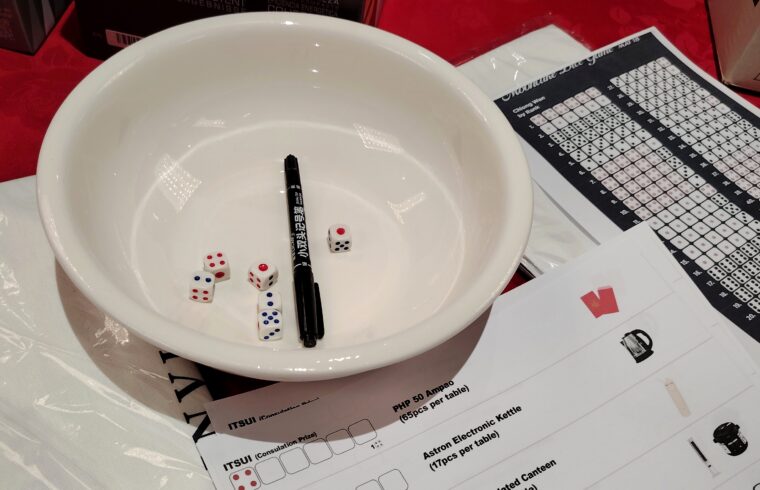
The clinking of dice against porcelain echoed through the grand hall of Gloria Maris Seafood Restaurant in Greenhills, San Juan on Wednesday night, where laughter rose louder than the dinner chatter.
It was no ordinary corporate gathering—by the time the program ended, guests of “Mid-Autumn Festival with the Masters” were led to the dice tables and swept up in a centuries-old game of chance that has outlasted dynasties.
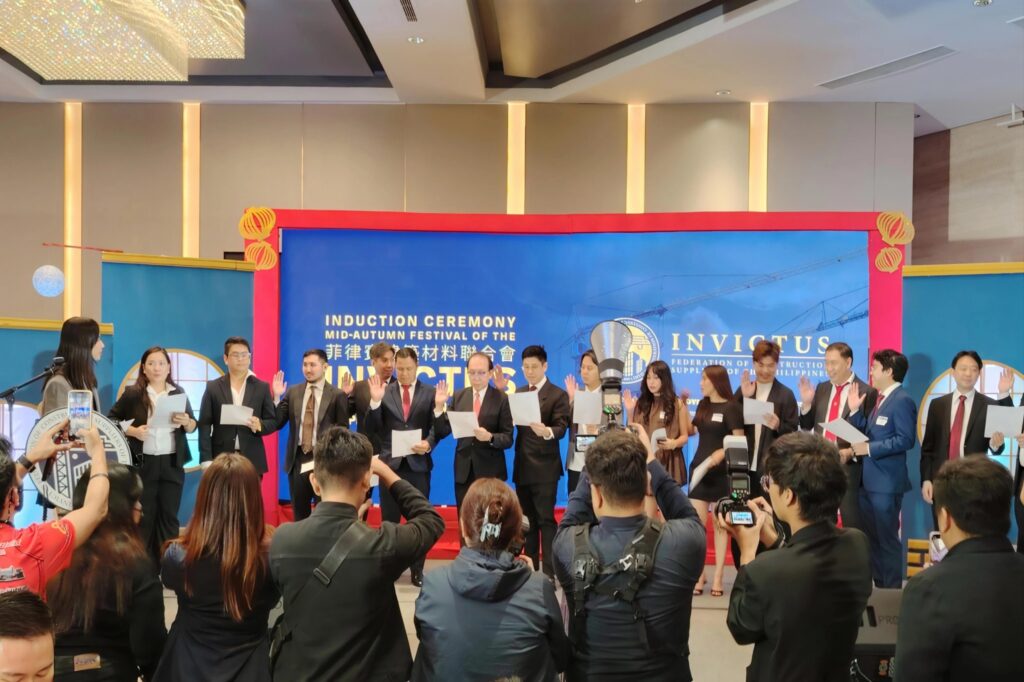
Hosted by the Federation of Construction Suppliers of the Philippines, or INVICTUS, under its president Aldrin Derrick Chua, the evening blended ceremony and culture with effortless charm. Former senator Cynthia Villar set the tone with her keynote speech, followed by the induction of new members led by San Manuel Mayor Donya Tesoro of Tarlac.
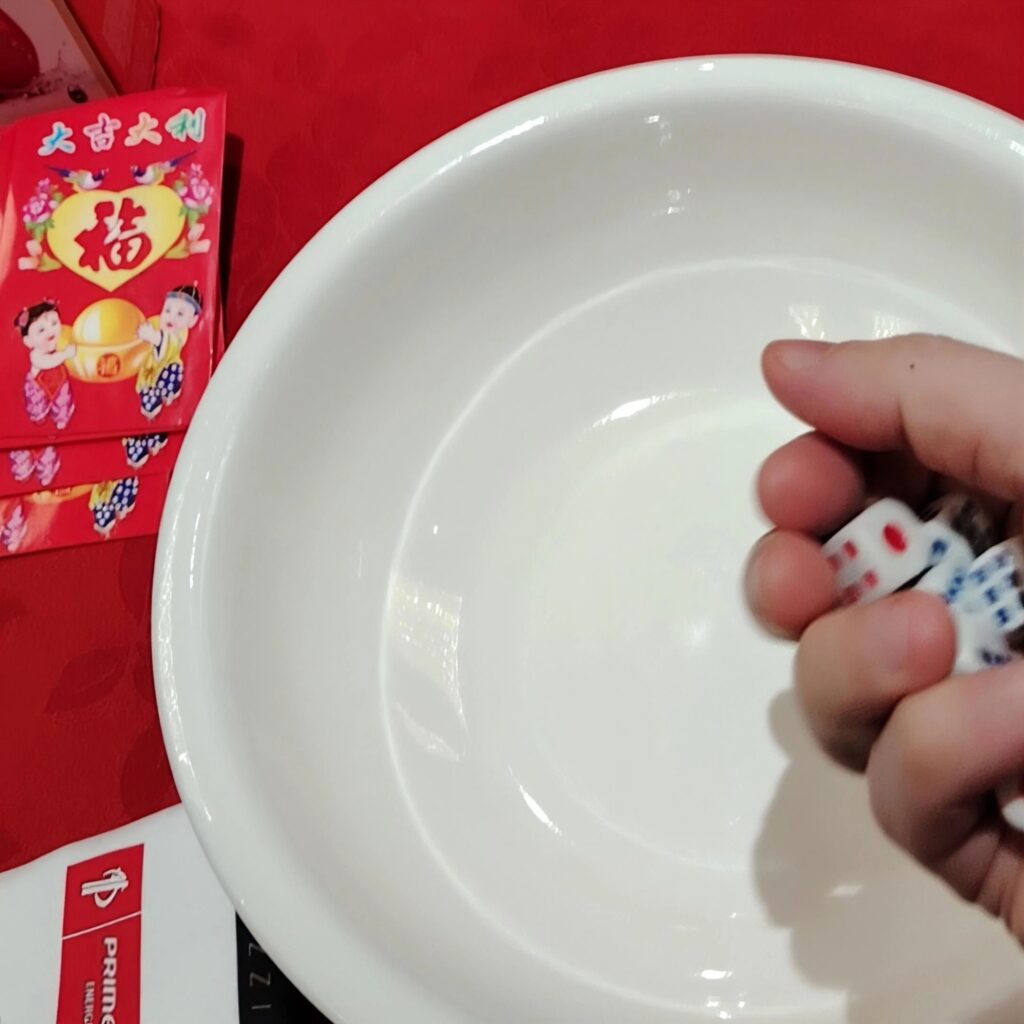
After a lively intermission by the East Drive Band, the stage lights were dimmed and the formality gave way to festivity. Bowls were readied on each table, dice were handed around, and soon, the entire hall was alive with shouts, cheers, and the unmistakable sound of six dice tumbling against porcelain—the mid-autumn dice game had begun.
Known in Hokkien as pua tiong chiu and in Mandarin as bo bing—literally “gambling the mid-autumn”—this beloved game dates back to 17th-century Xiamen, when military general Zheng Chenggong (Koxinga) devised it to ease the homesickness of his soldiers during the Mid-Autumn Festival. What began as a morale-boosting pastime became a seasonal ritual that celebrated both luck and learning.
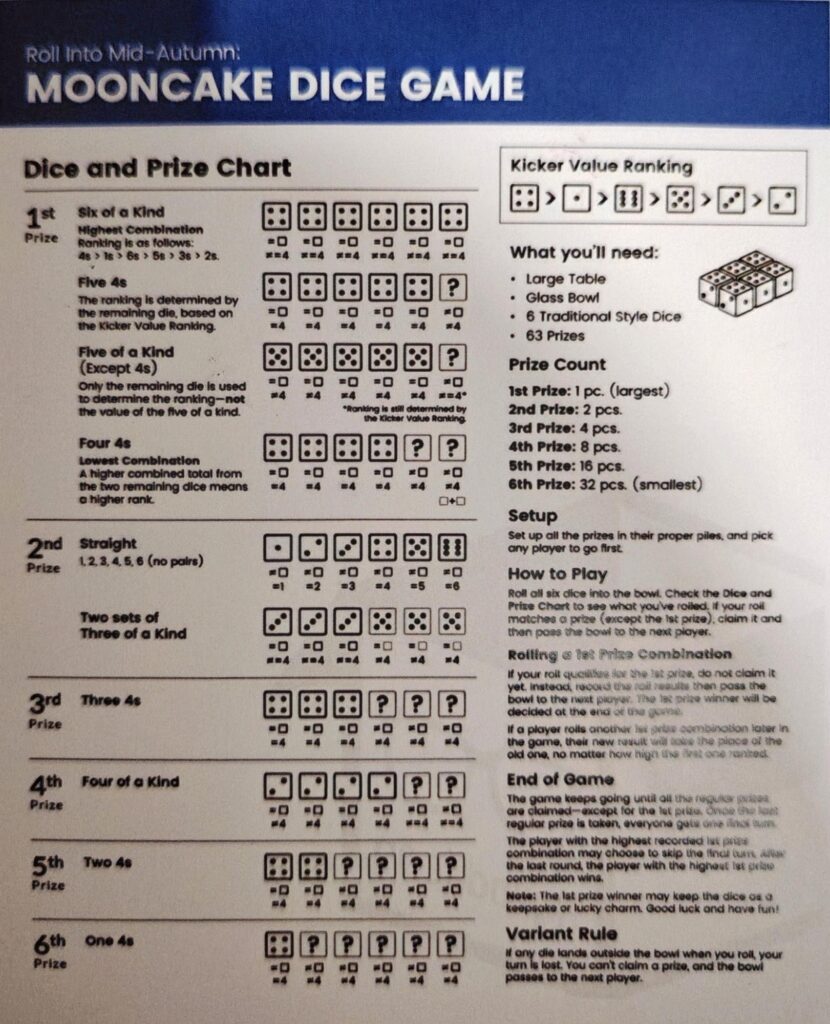
Each roll symbolized the scholar’s quest for success in the imperial exams, with the most coveted outcome—four dice showing the number four, or zhuang yuan (chiong wan)—crowning its player the “champion scholar.” The reward? The largest mooncake, a symbol of triumph and good fortune.
The number four became the star of the game not by accident. Traditionally painted in red ink, it represented luck and prosperity, and its dominance in the scoring system turned the “four 4s” roll into the game’s Holy Grail. Across generations and geographies—from Xiamen to Hong Kong, from Taiwan to the Philippines—the cry of “chiong wan” still rings out whenever a player hits that elusive combination.
The mechanics are deceptively simple: six dice, one porcelain bowl, and a spread of prizes that can range from playful trinkets to prized possessions. Each player takes a turn tossing the dice into the bowl, claiming rewards based on their combinations. One 4 earns a minor prize; two, something better; three 4s, an impressive mid-tier win. But four 4s or more? That’s the chiong wan, the roll that commands respect, applause, and often, envy.

At the INVICTUS celebration, this ancient game took on a modern twist. The chiong wan, or grand prize, went to the lucky winner of a 55-inch television, followed by a Nespresso machine for the runner-up. From JBL Clip 5 speakers and tower fans to insulated canteens and ampao envelopes, each tier of prize added a new wave of excitement across the room. The air was thick with playful rivalry, as architects, engineers, suppliers, and business leaders exchanged strategies, superstitions, and laughter over every roll.
Some players blew gently on their dice before tossing, others preferred a bold, one-handed throw—each convinced that luck favored their ritual. When someone rolled three 4s, the table erupted in cheers; when a player missed completely, the good-natured groans were just as loud. Amid the bursts of laughter and applause, the game became what it was always meant to be: a joyful equalizer that blurred titles and ranks, drawing everyone into the same circle of anticipation and chance.
By the end of the night, the real victory wasn’t measured by who took home the biggest prize. It was in the shared thrill of the throw, the nostalgia revived, and the camaraderie rekindled under the glow of the full moon.
The mid-autumn dice game—more than four centuries old—had once again proven timeless, bridging past and present with every clatter of dice. For INVICTUS and its members, the evening was more than a celebration; it was a reminder that in both business and life, fortune often smiles on those brave enough to roll.
Stay updated—follow Philippines Today on Facebook and Instagram, and subscribe on YouTube for more stories.