
More than three decades before he would become president of South Korea, Lee Jae-myung was a young human rights lawyer representing some of the most vulnerable workers in the country’s industrial zones—many of them migrants from across Asia seeking opportunity far from home.
One of those cases, dating back to 1992, resurfaced during Lee’s recent state visit to the Philippines.
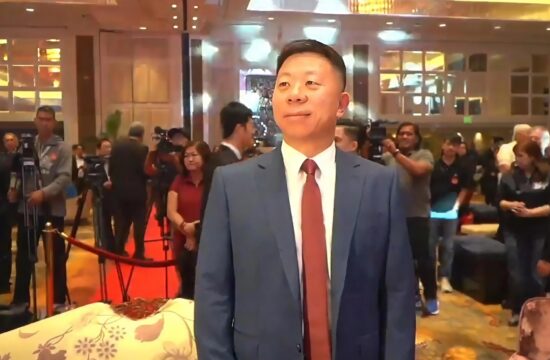
While in Manila, Lee reunited with Ariel Gallak, a Filipino worker whose life intersected with his decades earlier after a devastating accident inside a Korean factory. Gallak had been working long hours when the incident cost him an arm—an injury that, at the time, often meant foreign laborers were quietly sent back to their home countries without treatment or compensation.
Lee shared the memory of their meeting on social media, recalling how the story had remained with him for decades.
“I met a person who had remained deep in my heart on the soil of the Philippines. It was Ariel Gallak, with whom I formed a bond back in 1992 when I was working as a human rights lawyer.”
At the time, migrant workers injured on the job rarely received legal protection. When Lee learned of Gallak’s situation, he helped pursue a retrial to challenge the factory’s handling of the accident and seek proper compensation.
“After about a year, Mr. Gallak was able to receive recognition for convalescence and compensation.”
The two men would not meet again for more than three decades.
These days, Gallak has transformed his experience into advocacy. Drawing from the hardship he endured abroad, he now shares guidance with Filipinos preparing to work overseas—urging them to be aware of their rights and the risks migrant workers sometimes face.
“Today, Mr. Gallak shares advice with workers seeking jobs abroad, living a life that transforms his own pain into hope for others.”
Their reunion unfolded against the broader backdrop of Lee’s two-day state visit to Manila from March 3 to 4, undertaken at the invitation of Philippine President Ferdinand Marcos Jr.. The trip marked Lee’s first visit to the Philippines as president and coincided with the 77th anniversary of diplomatic relations between the two countries.
During meetings at Malacañan Palace, the two leaders discussed expanding cooperation in defense, infrastructure development, maritime security, and economic partnerships.
South Korea has been among the Philippines’ most active economic partners, with interest in major infrastructure projects as well as emerging sectors such as energy and critical minerals.
Yet amid discussions on geopolitics and trade, Lee’s reunion with Gallak highlighted the human stories that often lie behind the migration flows connecting the two countries.
For Lee, the moment underscored a broader principle about dignity and labor. “Even if nationalities, skin colors, and languages differ, the sweat shed on this land by all must be duly respected.”
The South Korean leader said his administration would continue working to improve protections for migrant laborers in his country, many of whom come from Southeast Asia.
“As president, I pledge to make even greater efforts so that foreign workers who come to Korea can return home carrying warm memories.”
Across South Korea, hundreds of thousands of migrant workers—many from the Philippines—continue to fill jobs in factories, shipyards, farms, and construction sites. Their labor has become an essential bridge linking the two economies and communities across the region.
The meeting ended with a brief, personal note—one that bridged the distance between Seoul and Manila. “Mr. Ariel Gallak, it was a pleasure to meet you. Ingat!”
Stay updated—follow Philippines Today on Facebook and Instagram, and subscribe on YouTube for more stories.