
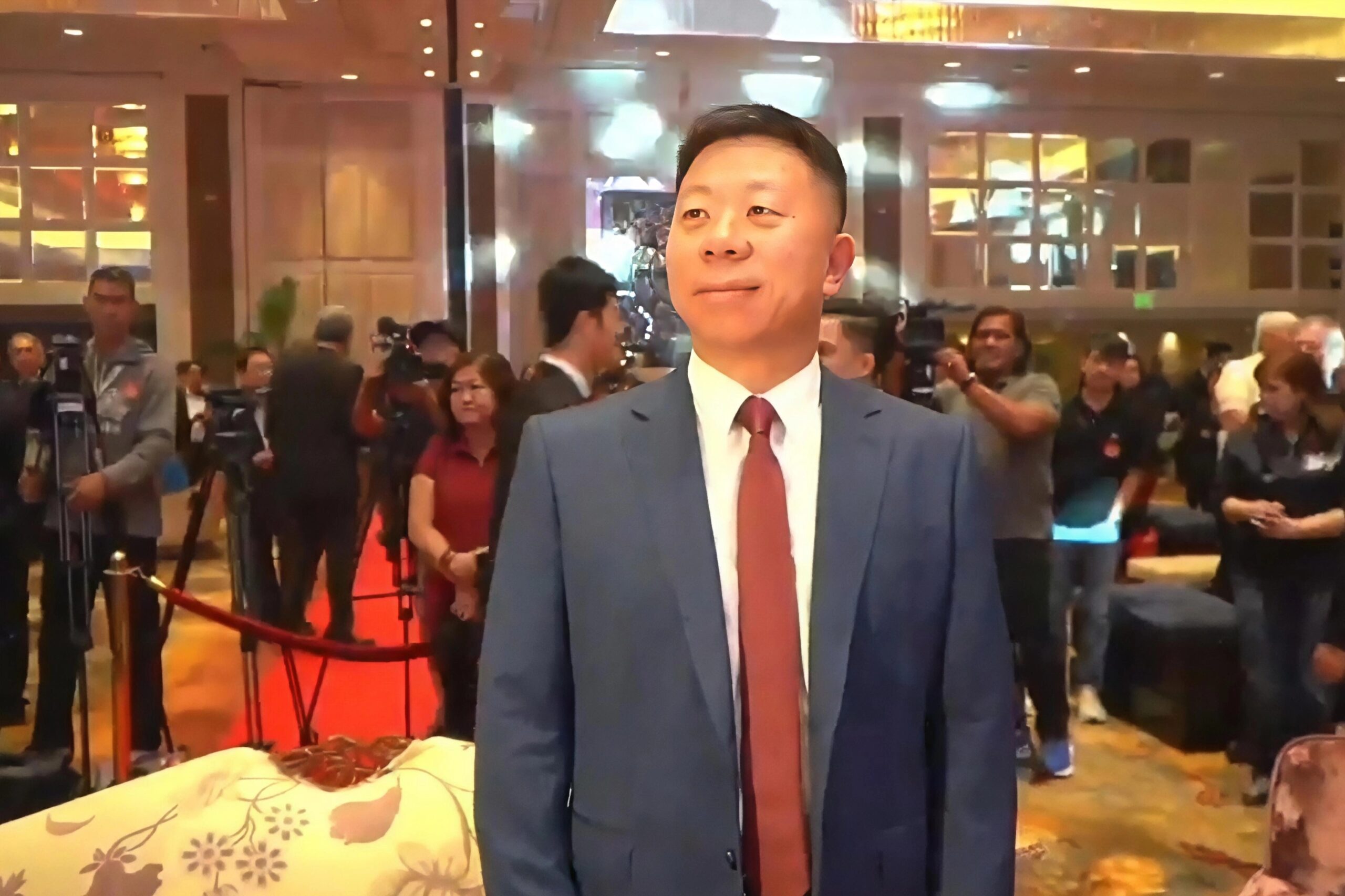

China’s new ambassador to the Philippines delivered his clearest message yet to Manila’s media corps: the country “does not need to choose sides” between Beijing and Washington, even as unresolved disputes in the South China Sea continue to test bilateral ties.
Speaking just over a month into his posting, Jing Quan framed China–Philippines relations as a matter of strategic restraint rather than rivalry, warning that rising tensions risk overwhelming a relationship he said should remain anchored in dialogue and long-term interest.
Jing acknowledged that maritime disputes between China and the Philippines have become more pronounced in recent years, alongside incidents at sea and what he described as narratives that “demonize China.” Yet he stressed that friction need not define the relationship, noting that China has managed similar land and maritime disputes with other neighbors through sustained dialogue.
“I believe that China and the Philippines also have the ability and wisdom to properly manage our differences,” the ambassador said.
He underscored that none of the Filipinos he has met across government, business, media, and civil society want conflict, adding that China shares the same view. Any confrontation, he said, would “inevitably harm the long-term relationship” between two neighboring countries whose peoples remain broadly friendly toward one another.
Against this backdrop, Jing said diplomats from both sides are working toward de-escalation and have reached “preliminary consensus on a roadmap for the next stage dialogue and negotiation.”
With Manila chairing ASEAN this year, he said both sides hope to accelerate negotiations on a Code of Conduct in the South China Sea, while keeping communication channels open, avoiding provocative actions, and preventing tensions from spiraling.
The ambassador repeatedly urged a wider view of the relationship, pointing to economic ties as a stabilizing force. China has been the Philippines’ largest trading partner for the past decade, he said, and Beijing welcomes more Philippine exports, particularly agricultural products. He cited recent durian export deals and the growing presence of Chinese brands, electric vehicles, and consumer technology in the Philippine market, alongside Chinese-backed infrastructure projects in Davao and Manila.
Still, Jing acknowledged an uncomfortable reality: Chinese investment in the Philippines lags behind most ASEAN countries. Sound economic cooperation, he said, depends on stable political relations and a more favorable business environment, suggesting that improved trust could unlock deeper collaboration in areas such as renewable energy, digital technology, and waste-to-energy projects.
Turning to the media, Jing stressed its role in shaping public opinion, calling for objectivity and fairness. While welcoming discussion on differences and disputes, he issued a firm warning against what he described as fake news and smears. “We will not remain patient and silent,” he said, adding that the embassy would respond decisively to defend China’s position.
As China and the Philippines move beyond the 50th anniversary of diplomatic relations, Jing appealed to historical perspective, expressing hope that when the relationship reaches its centenary, both sides will look back on this period not as a turning point toward confrontation, but as a moment when diplomacy was deliberately chosen over division.
Stay updated—follow Philippines Today on Facebook and Instagram, and subscribe on YouTube for more stories.